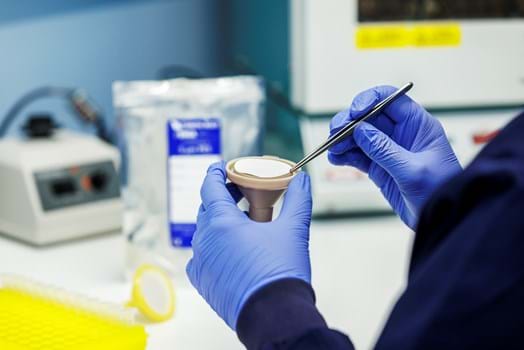


First Nation-led stewardship of Country through innovative eDNA and cultural knowledge systems. The EnviroDNA Traditional Owner Program represents an innovation for First Nation-led environmental monitoring, co-created by EnviroDNA and Traditional Owner collaborations.
This program empowers First Nations communities by providing the tools, training, and authority to enhance biodiversity management using environmental DNA (eDNA) technology.
Participants gain hands-on experience collecting and analysing eDNA samples on Country, learning how to interpret data to understand species distributions and ecosystem health.
Grounded in cultural governance, this program fosters a two-way exchange between traditional knowledge and scientific methods to support caring for Country. EnviroDNA partners with Traditional Owner organisations across Australia through this program.
How can eDNA be used to survey on Country?
Environmental DNA (eDNA) is the genetic material that all living things shed into the environment.
By collecting and analysing samples from water, land, or air, eDNA provides powerful insights into local species and overall biodiversity.
This program equips Traditional Owners with the knowledge and skills to carry out eDNA surveys, enabling biodiversity monitoring and conservation work on Country.
How can you use eDNA on Country?
-
Establish biodiversity baselines. Gather biodiversity data to understand the distribution of species and measure ecosystem health.
-
Inform on-ground management. Conduct ongoing biodiversity monitoring to detect change over time, before and after disturbances (e.g., fire) and management interventions.
-
Aboriginal Waterway Assessments. An effective monitoring tool within Aboriginal Waterway Assessments to inform management decisions, such as cultural flows and ongoing monitoring.
Our program is tailored to meet your objectives.
The program is fully tailored to each group, offering flexible delivery options, from multi-day on-Country field sessions to shorter hybrid-online formats.
Part 1: Introduction to eDNA (in-person)
- Introduction to eDNA: Learn what eDNA is and how it can be used to detect species and understand biodiversity on Country
- Laboratory tour (if onsite): Meet our scientists and see where your samples will go and how they are analysed
- Introduction to eDNA water sampling training at a nearby waterway site: Learn the different sampling techniques, including manual and automated eDNA water sampling
Part 2: eDNA pilot study on Country
-
Sampling on Country: 1 to 3 days sampling on Country with EnviroDNA staff support, including pilot study of ~50 samples.
-
On Country application of eDNA water sampling, including site selection and key considerations such as safety, hydrology, contamination, etc.
-
Knowledge sharing: Knowledge sharing session, including traditional knowledge of the biodiversity expected on Country. All Indigenous cultural and intellectual property is legally protected and EnviroDNA will work with Traditional Owners prior to the sampling on Country to develop an appropriate knowledge sharing approach for each program.
Part 3: Results and knowledge sharing (online or in person)
- Report: Provision of data and biodiversity survey report.
- Knowledge sharing: Knowledge sharing session to discuss eDNA pilot study results and connecting to on Country knowledge.
- Management application of eDNA: how eDNA data can be used and analysed to inform management and investment decisions.
Case studies
A look into eDNA training on Country with GLaWAC
For the past few years, the Gunaikurnai Land and Waters Aboriginal Corporation has been using eDNA to help build a clearer picture of the health of the Gippsland Lakes and surrounding waterways.
This work expanded into more of the team engaging in the Traditional Owner eDNA Training Program. Developed in partnership, this case study explores how the training is delivered and its impact for community and Country.
Baseline Data for the Budj Bim Cultural Landscape
The Gunditj Mirring Traditional Owners Aboriginal Corporation developed eDNA sampling skills and led a biodiversity survey of the region using eDNA.
“We have world heritage indicators to maintain the aquaculture system and its species. Using eDNA, it helps us to identify pest species within the system, native species and our cultural significant species.”
- Nicky Hudson, Water Officer, Gunditj Mirring Traditional Owners Aboriginal Corporation
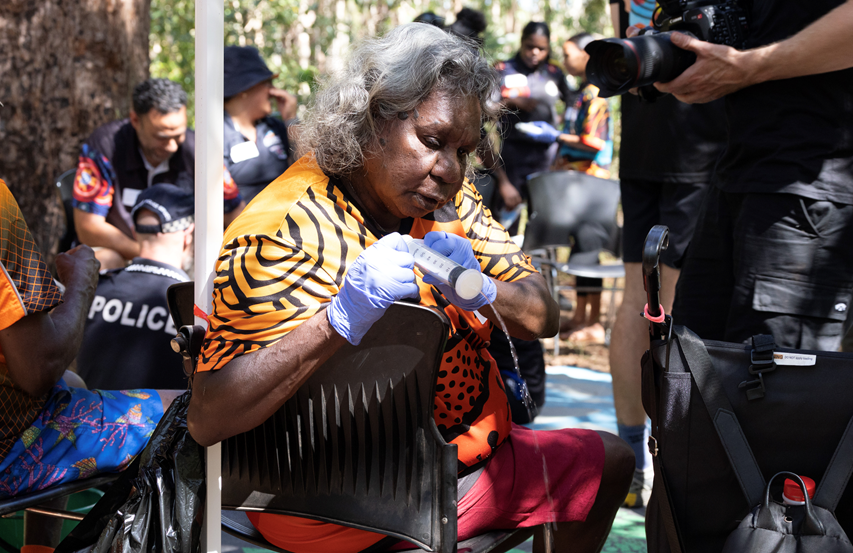
Community-driven water stewardship in western Cape York
We partnered with Indigital for the second season of the Caring for Country initiative, which is dedicated to engaging with communities through two-way learning experiences that build trust, relationships, and skills towards a collective vision.
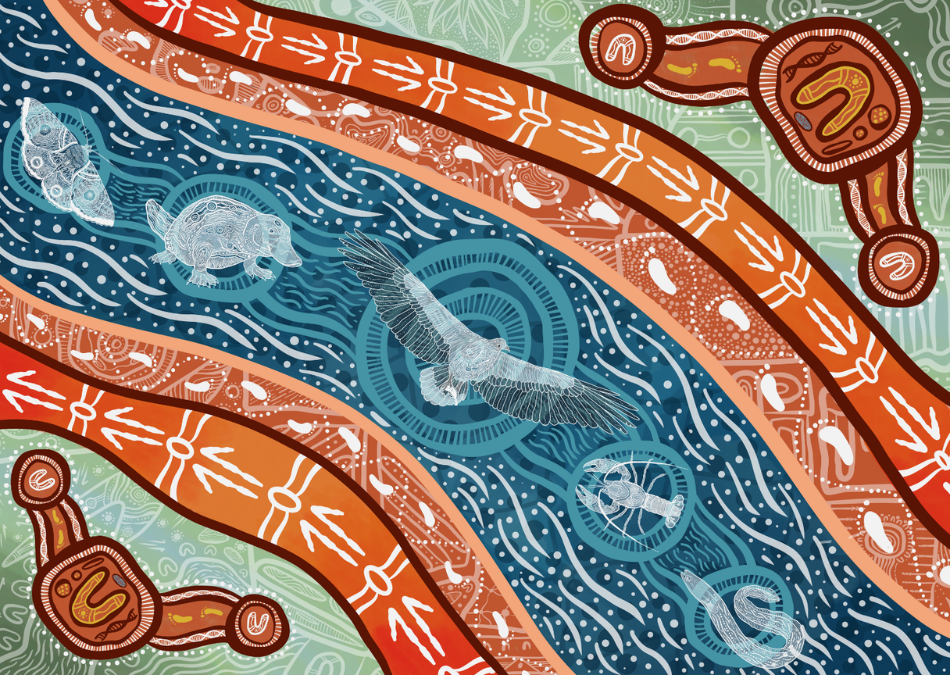
Commissioned by EnviroDNA, this artwork is a meaningful collaboration to help bring to life the intersection between Indigenous science and genetic science. Through our partnerships, we are committed to building collaborative monitoring programs that are guided by the experience, values, and outcomes gained by First Nations peoples. We are deeply thankful to esteermed Worimi artist, Gerard Black, for this artwork to help tell its story and allowing us to share it with our community.