


Central Queensland University
DNA metabarcoding
Research and conservation
The Capricorn Yellow Chat (Epthianura crocea macgregori) is a Critically Endangered species of Yellow Chat, listed under the Commonwealth Environmental Protection Act 1999. There are roughly 250 individuals left in isolated regions in Capricorn, making them a difficult species to study in the wild. Despite that, CQ University has been researching this species over the past 20 years to understand population demographics, genetics, and behaviour. This project uses environmental DNA to fill knowledge gaps on predation of the Capricorn Yellow Chat and diet.
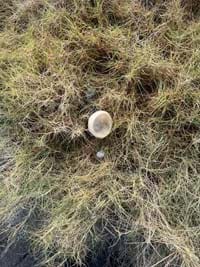
The project's aim was to answer two key questions: 'What species are predating the chat, and what are Capricorn Yellow Chats predating?'. To gain insights into predation, it was essential to establish a method for obtaining suitable samples. Following the initial project consultation, a solution was proposed: deploying artificial eggs and conducting nest rinsing for eDNA analyses, aimed at identifying potential predators interacting with the eggs. To understand their diet, scat-based analysis would be suitable to reveal what they are preying on.
Working closely with CQ University, we designed a terrestrial eDNA survey design. The field survey was undertaken between May and June in Central Queensland. The artificial eggs were crafted from plasticine, and five artificial egg swab samples were collected, along with five water samples gathered from the rinsed nests. EnviroDNA conducted an analysis of these samples using eDNA metabarcoding to identify vertebrate species. We employed three meticulously designed metabarcoding panels to provide the most comprehensive insights.
For the diet analysis, Capricorn Yellow Chat faecal samples that had been collected as part of an ongoing project on Curtis Island were swabbed for eDNA. Following this, swab sampling was performed on each individual sample to increase the DNA yield for extraction.
Results
To assess predation of the Capricorn yellow chat, metabarcoding analyses across all samples revealed 25 taxa were detected, including 6 introduced species and 9 native species. Detections included 8 fish, 1 amphibian, 9 birds, and 7 mammals. Through detection of high DNA reads and using additional ecological validation, we can infer that it was likely brahminy kites and black kites predating on the eggs.
To understand the diet of Capricorn Yellow Chats, metabarcoding uncovered 26 taxa. The genus Odontomyia (Soldier flies) was the most commonly detected taxon, with the mosquito species (Culex sitiens) the most commonly detected at the species taxonomic rank.
Combined, the surveys revealed insights into the bottom-to-top food chain. By expanding survey efforts with creative eDNA techniques, EnviroDNA analysis revealed hidden ecological interactions that would otherwise remain invisible.
Impact
-
By successfully gathering novel sampling approaches for CQ University, a new suite of methodologies can be adopted to support ongoing monitoring in the face of population decline.
-
The findings from the eDNA insights will contribute to refining effective and targeted management practices to protect the endangered Capricorn yellow chat.
-
Because of its Critically Endangered status, the Capricorn yellow chat is an indicator of ecosystem health, and strategies to support close management of this species are important for greater conservation protection impact.
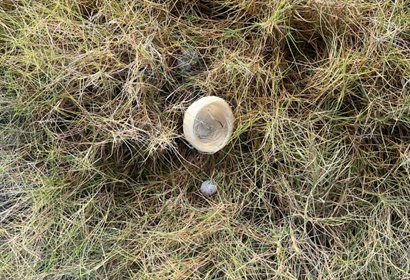
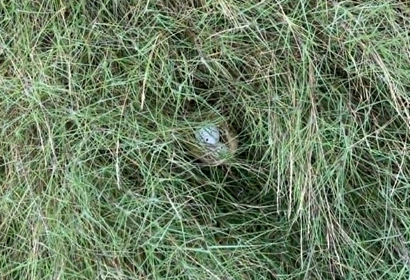
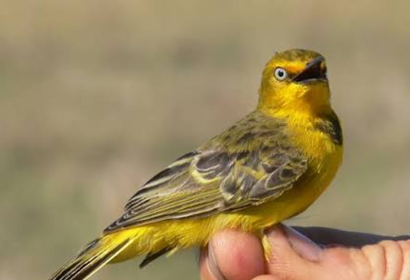
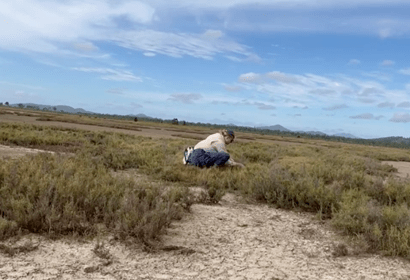
Artificial nests and Dr Grace Blackburn, Postdoctoral Research Fellow at CQU in the field. Capricorn Yellow Chat captured by Wayne Houston.
More information
-
Project acknowledgements: This project was funded by Gladstone Ports Corporation, and Birds Queensland. CQU team members for this project include Grace Blackburn, Wayne Houston, Leif Black, and Nicole Flint. Conservation of the Capricorn Yellow Chat involves many stakeholders, including Queensland Parks and Wildlife Service, BirdLife Capricornia, and the Darumbal Land and Sea Rangers.
-
Species: Capricorn yellow chat (Epthianura crocea macgregori) Critically Endangered under the Commonwealth Environmental Protection and Biodiversity Conservation Act 1999.
-
Method: Metabarcoding assay applied to water samples collected with EnviroDNA’s syringe-filter sampling kits and swab kits.